
Mohammad Marshoud on liquidity, large-scale projects and the evolving role of finance leaders in Saudi Arabia
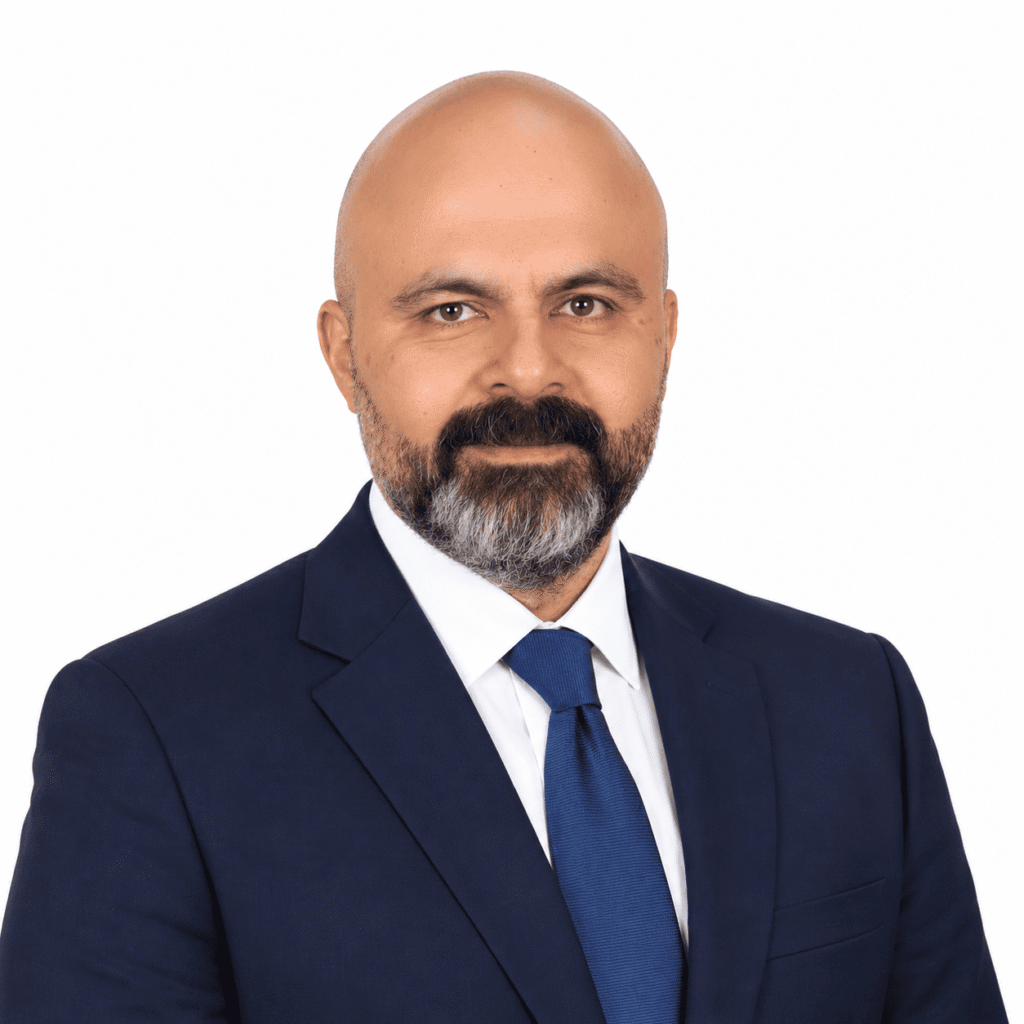
MOHAMMAD MARSHOUD
Director of Finance, AL-AYUNI Limak Contracting Company
“Finance must protect value, but it must also help create value.”
As Saudi Arabia undergoes an extraordinary economic transformation, finance leaders are being called upon to move beyond reporting and control. They must anticipate risk, guide strategic decisions and ensure that growth remains financially sustainable. In this interview with The Leadership Gazette, Mohammad Marshoud shares insights from more than two decades in finance and explains why modern finance leadership must combine financial discipline with strategic agility.
1. How has your approach to financial leadership evolved throughout your career?
Over more than two decades in finance, my understanding of leadership has evolved considerably.
Earlier in my career, success was largely about accuracy, control, compliance and delivering reliable
financial information. These fundamentals remain essential, but experience teaches you that they are
only the starting point.
Today, I see financial leadership as being much closer to the business. A Finance Director or CFO should
not simply report what happened; we should explain why it happened, anticipate what could happen next
and help management determine what to do about it.
Working across different industries and, more recently, within complex, large-scale projects and joint
ventures in Saudi Arabia has reinforced this view. Managing liquidity, banking relationships, project
financing, working capital, governance, ERP transformation, audits and financial close-out requires much
more than technical financial knowledge. It requires commercial judgement and the ability to see the
bigger picture.
My philosophy today is simple: finance must protect value, but it must also help create value.
2. What financial risks are most often underestimated in large-scale projects?
One of the most underestimated risks is the difference between profitability and liquidity.
A project may appear profitable in its financial statements while still experiencing significant cash
pressure. Collections, supplier obligations, retention, advance-payment recovery, bank guarantees,
financing costs and project expenditures rarely move at exactly the same pace.
I have learned to pay particular attention to working capital and cash-flow timing. Revenue is important
and margins are important, but ultimately, cash gives a project the ability to continue operating.
Another frequently underestimated area is project close-out. People sometimes assume that when
construction or operational activity ends, the financial work ends with it. In reality, finance may continue
dealing with final accounts, claims, supplier reconciliations, open commitments, inventory, asset
disposals, guarantees, taxation, audits and contractual settlements for months afterwards.
For large-scale projects, therefore, the real question is not simply, “Is this project profitable?” It is: “Is it
profitable, cash-generative, properly financed and financially sustainable throughout its entire lifecycle?”
3. How is Saudi Arabia’s rapidly evolving business environment changing the role of finance leaders?
Saudi Arabia is undergoing an extraordinary economic transformation, and that transformation is also
redefining financial leadership.
Vision 2030, giga-projects, localization, private-sector development, digitalization and increasingly
sophisticated governance expectations mean that finance leaders must operate well beyond traditional
accounting and reporting.
In today’s environment, a finance leader needs to understand capital allocation, liquidity, banking and
financing, technology, risk, governance and commercial strategy—as well as data and analytics.
THE LEADERSHIP GAZETTE | FINANCE LEADERSHIP
FINANCE LEADERSHIP • 3
Having worked closely with large-scale projects in Saudi Arabia, I have seen how quickly decisions
sometimes need to be made and how significant their financial consequences can be. This makes it
increasingly important for finance to be involved at the beginning of the decision-making process rather
than being asked to evaluate the financial impact afterwards.
I believe the next generation of successful CFOs in Saudi Arabia will be those who can combine financial
discipline with strategic agility—protecting their organizations while helping them capture the opportunities
created by this remarkable transformation.
4. What role should finance leaders play in identifying new opportunities for strategic growth?
I believe finance leaders should be at the centre of strategic growth discussions.
Finance occupies a unique position within an organization because we see the business horizontally. We
interact with operations, procurement, commercial teams, banks, management, shareholders, auditors
and many other stakeholders. This gives us a broad perspective on where value is being created—and
where it may be lost.
When evaluating growth, however, finance should look beyond revenue. Growth does not automatically
translate into value creation.
A new project, investment, acquisition or market opportunity should be assessed in terms of its return,
cash generation, capital requirements, financing structure, risk, working-capital impact and long-term
strategic value.
The modern finance leader therefore has two equally important responsibilities: helping the organization
recognize opportunities and ensuring that it has the financial strength and discipline to pursue them
successfully.
Stay Ahead
Get exclusive interviews & award updates in your inbox

A global business magazine bringing you exclusive interviews, in-depth features, and stories on the leaders shaping industries worldwide.
Quick Links
© 2026 The Leadership Gazette