
Finance Leadership Beyond the Numbers
- Home
- Human Resources
- Finance Leadership Beyond the Numbers
Usama Elruby on IPO readiness, disciplined growth and the future of AI in finance
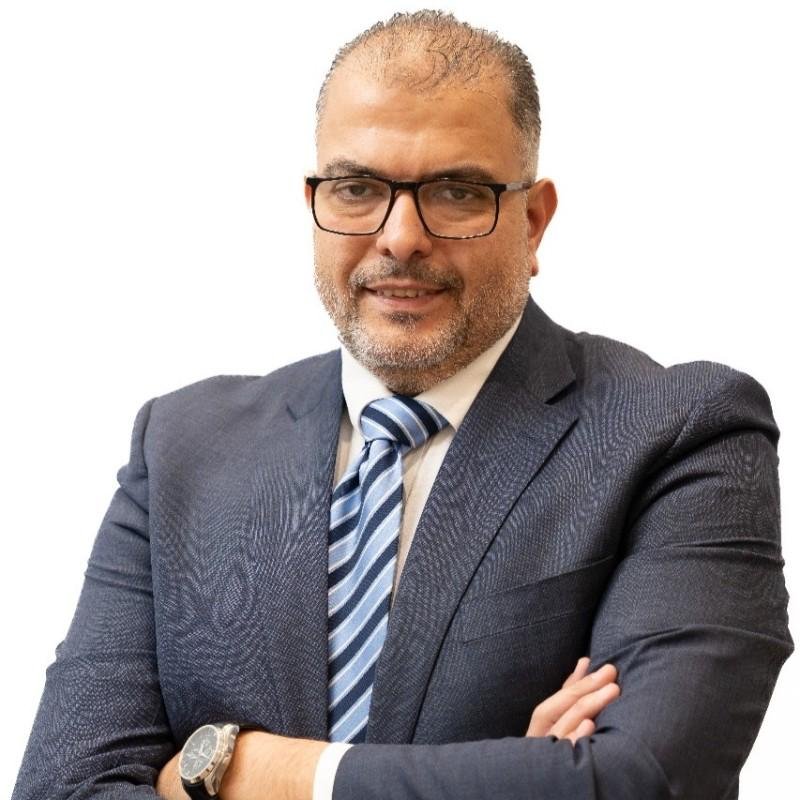
Usama Elruby
Chief Financial Officer, Alkhorayef Petroleum Company
With experience spanning three distinct IPO journeys, Usama Elruby has developed a leadership philosophy grounded in governance, operational understanding and disciplined execution. In this conversation with The Leadership Gazette, he discusses the financial risks accompanying rapid growth, the opportunities created by Saudi Arabia’s economic transformation, and why tomorrow’s finance leaders must embrace both technology and change management.
1. What has been the most defining experience in your journey as a finance leader?
The most defining experience has been navigating three separate IPO journeys, each at a different stage of maturity—from being part of the early execution team at DESD/Extra Stores and leading the financial due diligence for Alamar Foods’ IPO to now directing the entire IPO-readiness programme, end to end, as Group CFO of Al-Romansiah. What made these experiences defining was not merely their technical complexity. They taught me that an IPO is not simply a finance project; it is an organisational transformation. You are rebuilding governance, strengthening internal controls and introducing greater reporting discipline while the business continues operating at full speed. Managing that combination of technical rigour and organisational change has shaped how I approach every major initiative today.
2. What financial risks do businesses tend to overlook during periods of rapid growth?
One of the most commonly overlooked risks is treating working capital and internal controls as an afterthought while pursuing top-line growth. Companies expanding rapidly—particularly in the F&B and retail sectors, where I have spent most of my career—often scale their outlets, headcount and revenue faster than they develop their financial
infrastructure. That gap eventually appears through reconciliation issues, weak cash visibility across multiple locations or related-party transactions that were never properly documented. Another frequently overlooked risk is relying too heavily on a single source of financing or one banking relationship during expansion. When a company is growing quickly, diversifying its funding sources and maintaining strong relationships with multiple banks is not optional; it is an essential resilience measure. The companies that manage growth successfully understand that financial discipline is not a brake on expansion. It is an enabler of sustainable growth.
3. What opportunities do you see for Saudi businesses as the Kingdom’s economy continues to diversify?
Vision 2030 has fundamentally changed the growth potential for sectors such as F&B, retail and consumer businesses. Companies now have access to a considerably larger addressable market, driven by tourism growth, giga-projects and a young, increasingly urban population with rising disposable income. What excites me most is the continued maturation of Saudi Arabia’s capital markets. More Saudi companies are IPO-ready or progressing towards an IPO today than at any point during the past decade. This is creating access to domestic growth capital that was previously much harder to secure. Within the F&B sector specifically, I see considerable potential for regional GCC expansion. Companies that establish strong governance and financial discipline early are much better positioned to grow beyond Saudi Arabia into Bahrain, the UAE and the wider Gulf. This is precisely the trajectory we are pursuing at Al-Romansiah.
4. How do you see AI and automation transforming finance functions over the next few years?
We are moving from viewing AI as a productivity enhancement to treating it as a core capability embedded within the finance function. In practical terms, this will mean faster variance analysis and anomaly detection during the month-end close, AI-assisted scenario modelling for expansion and investment decisions, and significantly quicker preparation of the extensive documentation required for processes such as IPOs. The more important shift, however, is philosophical. Finance is evolving from a function that primarily reports what has already happened into one that is increasingly predictive and advisory. Investors and boards now expect management to demonstrate genuine forward visibility, rather than simply presenting accurate historical figures. The finance leaders who remain ahead over the coming years will be those who personally understand and help shape AI adoption—not those who treat it as an IT initiative added to finance from the outside.
5. What advice would you give to the next generation of finance professionals aspiring to become strategic business leaders?
Build your financial and governance discipline as though you are already accountable to the public markets—long before your organisation actually reaches that stage. Across multiple IPO journeys, I have seen that companies which treat transparency and clean reporting as problems to address later inevitably pay for that delay through weaker valuations, prolonged due diligence and diminished investor trust. My second piece of advice is to get close to the operational side of the business rather than focusing exclusively on the numbers. The best financial decisions I have made came from understanding how the business actually operates—not simply what its financial statements revealed about it. Finally, never underestimate the importance of change management. The most difficult part of any major transformation, whether it is an IPO or a system migration, is rarely the technical work. It is bringing your people with you.
About the Leader
Usama Elruby is the Chief Financial Officer of Al-Romansiah. His professional journey includes experience across three IPO programmes, financial due diligence, governance transformation and financial leadership within the F&B and retail sectors. In his current role, he is directing Al- Romansiah’s end-to-end IPO-readiness programme while supporting the company’s continued growth and regional ambitions.
Stay Ahead
Get exclusive interviews & award updates in your inbox

A global business magazine bringing you exclusive interviews, in-depth features, and stories on the leaders shaping industries worldwide.
Quick Links
© 2026 The Leadership Gazette