“Profit is an opinion until it converts into cash, but good management should not sacrifice long-term enterprise value simply to improve this year’s numbers.”

Group CFO | Finance Strategy Transformation and Value Creation
Published on Nov 4, 2026
Finance leadership is no longer defined by reporting accuracy alone. In this interview, Amit Agrawal reflects on the evolution from performance-driven manager to empathetic business leader, the discipline behind turnarounds and capital allocation, and why trusted data matters more than adding another layer of technology.
Early in my career, I was aggressive and intensely focused on delivery. If there was a target or deadline, my priority was simply to get it done, and I expected the same intensity from everyone around me.
That has changed considerably. I am still demanding about performance and accountability, but my empathy has grown. Experience teaches you that people respond to different styles of leadership, and understanding people is as important as understanding the numbers.
An early experience at Tata Steel shaped me significantly. I was involved in the concept of spinning off nine non-core service businesses into a separate company, JUSCO. I wrote the original concept note, helped incorporate the company and became its second employee. In less than a year, something that had begun on paper had more than 5,000 employees. It taught me that building a business is not primarily about spreadsheets or organisation charts. It is about people, culture, ownership and helping everyone believe in what you are creating.
As my career moved through finance, private equity and general management, my approach became more collaborative. Today, I challenge people and set high expectations, but once responsibility is assigned, I believe in giving people the trust and authority to deliver. The biggest evolution has been from being deliverable-driven to being deliverable-driven with empathy. The expectations have not reduced; the way I try to reach them has changed.
Turnarounds, restructurings, exits, acquisitions and businesses under financial pressure all involve difficult decisions. One experience that stayed with me was leading the turnaround of a loss-making company. We had to make uncomfortable decisions about costs, assets, businesses and the way the organisation operated. Over several years, we moved from losses to profitability, improved EBITDA significantly and reduced corporate overheads.
I learned that delaying a difficult decision rarely makes it easier. More often, it reduces the options available. But I also learned something equally important: numbers tell you what needs to change; they do not tell you how to take people through that change. A restructuring that looks perfect in Excel can fail if people do not understand why it is necessary.
Since then, I have tried to be decisive when the facts are clear, while remaining transparent and empathetic about the reasons behind difficult decisions.
Revenue and EBITDA matter, but I would never assess a business from the P&L alone. I pay close attention to cash flow, working capital, return on capital employed, margins and asset utilisation. I also look at the relationship between EBITDA, operating cash flow and collections. If EBITDA keeps increasing but cash does not follow, I want to understand why.
In an asset-intensive business, utilisation and return on capital are particularly important. Yet we sometimes make the mistake of evaluating everything through a short-term financial lens. Long-term value creation matters too.
An asset that is cheaper today is not necessarily the asset that creates the greatest value. Equipment longevity, reliability, safety, residual value, maintenance cost and the ability to generate revenue consistently over many years all matter. Paying more for a high-quality asset, such as a Liebherr crane rather than a cheaper alternative, can make better economic sense over its full life even when the initial capital expenditure and short-term returns suggest otherwise.
I am interested not only in the return being generated today, but also in whether today’s decisions will preserve and create value five, ten or twenty years from now. Profit is an opinion until it converts into cash, but good management should not sacrifice long-term enterprise value simply to improve this year’s numbers.
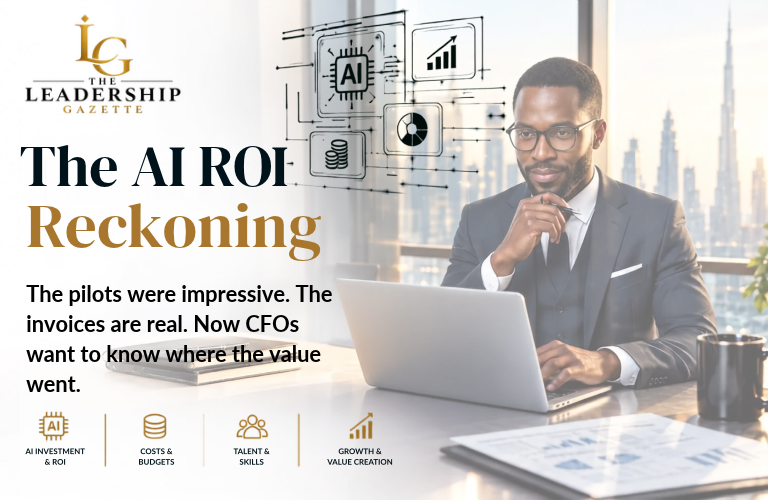
I am passionate about this because I have been involved in ERP implementations and digital transformation across several organisations. One common mistake is beginning with the technology: companies buy an ERP, an analytics platform or an AI solution and then search for problems it might solve.
I prefer to start with the business question: what decision are we trying to make better, faster or with greater transparency? Technology should then solve that problem. Even more fundamental is data integrity. No ERP, dashboard or AI tool can compensate for poor underlying data.
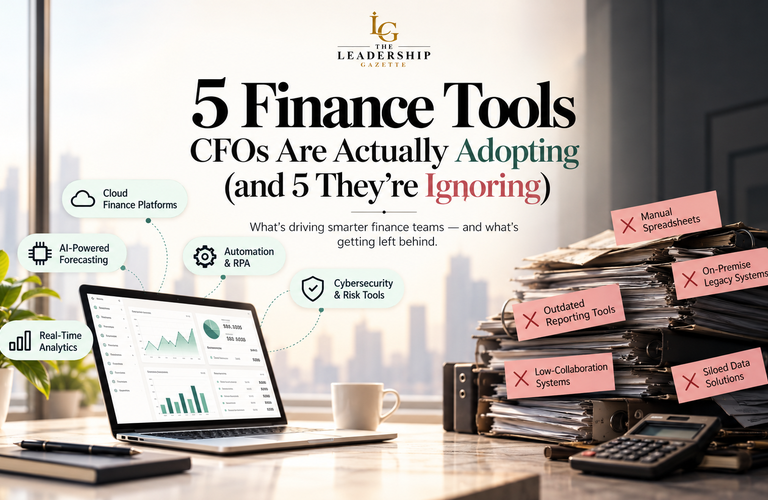
Organisations need to determine which information matters, capture it properly at source and maintain a single source of truth. If departments are still debating whose report or spreadsheet contains the correct number, technology has not solved the problem. I do not need another dashboard displaying 100 KPIs. I would rather have ten reliable indicators that show where margins are falling, which assets are underutilised, where collections are delayed and where management intervention is required.
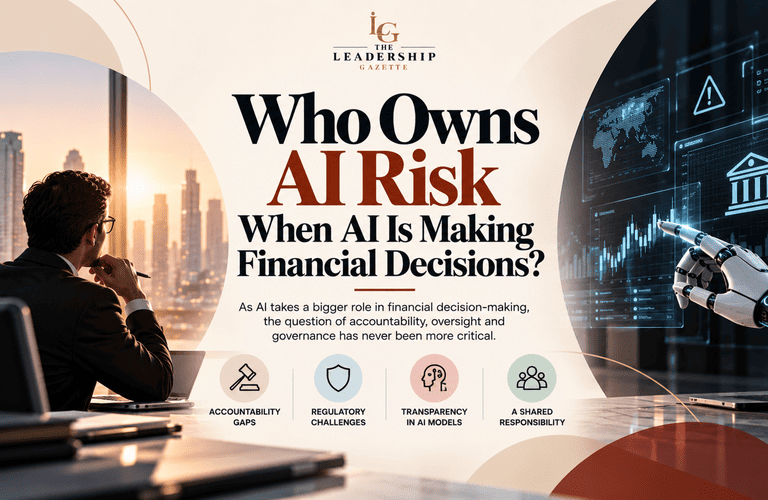
The same principle applies to AI. Its potential is tremendous, but AI working with incomplete or unreliable data can produce the wrong answer much faster and, sometimes, more convincingly. Successful digital transformation combines process, clean data, technology and people. The objective is not more technology. It is better and faster decisions based on information management can trust.
The finance landscape in the GCC is undergoing a fundamental change. Many successful Middle Eastern businesses have historically been entrepreneurial and relationship-driven. That model has created outstanding companies, but as the region becomes more connected to international capital, businesses will need to combine entrepreneurial strength with greater professionalism, transparency and governance.
Corporate tax, VAT, transfer pricing, e-invoicing and expanding regulatory and governance requirements are already accelerating this change. At the same time, I expect the GCC to attract more international investors, banks, private equity, venture capital and institutional capital. They will demand higher-quality financial information, stronger governance, more sophisticated reporting and greater transparency around performance and risk.
Data and technology will therefore become equally important. Finance professionals will need to understand analytics, automation and AI alongside traditional accounting and finance. Capital allocation, working-capital management and quality of earnings will also receive far more attention. Accounting profit alone will not be enough; boards, lenders and investors will increasingly focus on return on capital, free cash flow, cash conversion and the sustainability of earnings.
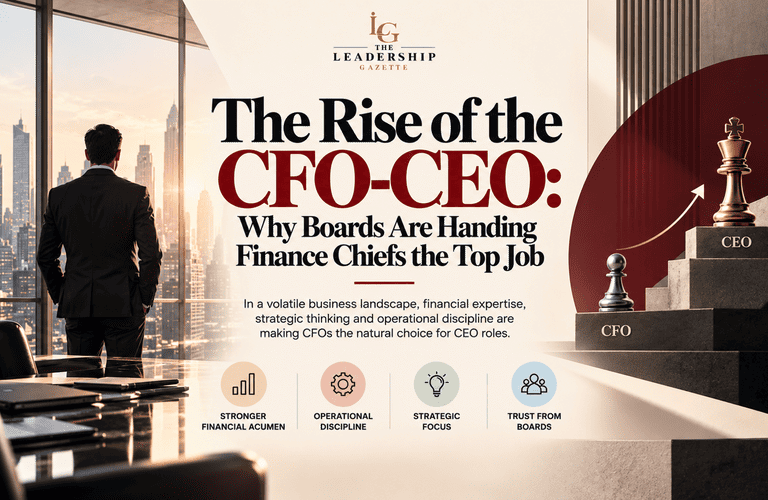
The modern CFO sits at the intersection of finance, strategy, technology, risk, governance and operations. The leaders who create the greatest value will help businesses move from entrepreneurially successful organisations to professionally governed, institutionally investable enterprises without losing the entrepreneurial spirit that made them successful.

© 2026 The Leadership Gazette