
From Representation to Influence
- Home
- Human Resources
- From Representation to Influence
Mona Cheriyan on growing into leadership, enabling others and building genuine pathways for women
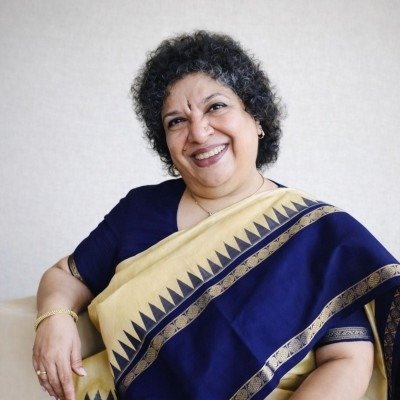
Mona Cheriyan
HR Leader
Leadership is less about being the person with all the answers and more about creating the conditions for other people to succeed.
In this Leadership Gazette conversation, Mona Cheriyan reflects on growing into leadership before feeling entirely ready, learning to replace self-reliance with trust, and why the next chapter for women in Indian leadership must move beyond inclusion towards genuine influence.
1 . Could you tell us about your leadership journey and what inspired you to pursue it?
I do not think I ever consciously set out to become a leader. It happened gradually—through taking on responsibility, staying curious and often saying yes to opportunities before I felt completely ready for them. As I progressed in my career, I realised that what I enjoyed most was not simply delivering results, but building something with people: bringing different strengths together, helping people find their confidence and creating an environment where good people could do their best work. I think that is what ultimately drew me to leadership. The more experience I have gained, the more I have realised that leadership is less about being the person with all the answers and more about creating the conditions for other people to succeed.
2. What has been the biggest challenge you have faced in your career?
One of my biggest challenges has been learning not to confuse being capable with having to do everything myself. Earlier in my career, I felt that if I wanted to be taken seriously, I had to be prepared for everything, get everything right and, frankly, sometimes work harder than necessary to prove that I could. Over time, I realised that this is not sustainable leadership. You cannot build great teams if everything has to pass through you. I have had to become much more comfortable with not having all the answers, asking for help, trusting people and making decisions without complete certainty. That shift—from proving yourself to empowering others—has probably been one of the most important transitions in my leadership journey.
3. How do you think the role of women in Indian leadership has changed?
I think it has changed enormously. When I look at the opportunities available to women today, there is much greater acceptance of women not only participating in leadership, but actually defining what leadership looks like. That matters. Women should not feel that they have to adopt an old model of leadership in order to be successful. At the same time, we should not confuse greater representation with having solved the problem. Women may be entering organisations in larger numbers, but the real questions are: Who gets the biggest opportunities? Who gets sponsored? Who receives the difficult assignments? And ultimately, who gets a seat at the table? For me, the next phase is about moving from inclusion to genuine influence—not simply being in the room, but having your voice shape what happens there.
4. What impact do you hope to make through your work?
I would like my impact to go beyond the immediate outcomes of the work I do. Of course, results matter. But when I look back, the moments that stay with me are often those in which I have seen someone grow, take on a bigger role, find their voice or do something they once did not believe they were capable of doing. If I can build strong teams, create opportunities and leave people more confident and capable than when I first worked with them, that is meaningful impact to me. Ultimately, I would like to be remembered not only for what I achieved, but for what I enabled in other people.
5. What more can organisations do to support women in leadership?
I think organisations need to move beyond good intentions and focus on creating real pathways to leadership. It is not enough to identify women as ‘high potential’. We have to ask whether we are actually giving them the experiences that prepare them for senior leadership: the major assignments, difficult decisions, visibility, commercial responsibility and opportunities to work closely with senior decision-makers. Sponsorship is particularly important. Someone can mentor you for years, but sometimes what changes a career is having a senior person say, ‘I think she is ready for this—give her the opportunity.’ Flexibility matters too, but it should not be positioned as a concession for women. It should simply be part of a modern, effective way of working. Most importantly, organisations need to assess talent without making assumptions about what a leader is supposed to look like. Give women the opportunity, trust them with meaningful responsibility and then judge them on what they deliver.
6 . What is something people may not know about your journey to success?
I think people often see the confidence that comes with experience, but they do not always see how much uncertainty there was along the way. There were certainly moments when I questioned whether I was ready for an opportunity or whether I was making the right decision. There were also setbacks that felt quite significant at the time. What I have learnt is that confidence does not always come before you take the step. Sometimes you take the step first, and the confidence comes from figuring things out along the way. Success is rarely as linear as it looks from the outside. There are decisions that work, decisions that do not, moments when you get lucky and moments when you simply have to keep going. That, perhaps, is the part of the journey people do not always see.
7 . What can senior leaders do to create stronger leadership pipelines for women?
I think senior leaders have to make it personal and intentional. It is not enough to say, ‘We need more women leaders.’ We need to ask: Who are the women with potential? What experiences do they need? Who is advocating for them when they are not in the room? And are we giving them the same stretch opportunities we give others? I also believe sponsorship is critical. A mentor can give you advice, but a sponsor can open a door, put your name forward and create visibility at exactly the moment it matters. Ultimately, senior leaders need to take ownership of the pipeline. If women are consistently missing from succession plans or the most important leadership opportunities, we need to ask why. For me, building a strong leadership pipeline is about seeing potential early, investing in it consistently and ensuring that talent—rather than assumptions—determines who gets the opportunity to lead.
Stay Ahead
Get exclusive interviews & award updates in your inbox

A global business magazine bringing you exclusive interviews, in-depth features, and stories on the leaders shaping industries worldwide.
Quick Links
© 2026 The Leadership Gazette