1 . How has your approach to leadership evolved throughout your career?
Over more than three decades, my leadership approach has been shaped by my education, different roles and industries, diverse cultures and the people I have worked with and learned from.
My academic background in Management Information Systems taught me to look at organisations as interconnected systems. It shaped an analytical approach: understanding relationships, root causes and broader business implications before moving to solutions. That way of thinking stayed with me as my career moved into leadership, people and transformation.
I began my career in sales, which taught me to listen before speaking, understand the need behind a request, build trust and connect my work to value. Consulting added another discipline: diagnose the problem before rushing to provide a solution.
Working with different leaders has made me a firm believer in positive leadership. I have seen the difference clarity, trust and encouragement make to people’s confidence and contribution. Positive leadership does not mean avoiding difficult conversations or lowering expectations. High standards and accountability must coexist with respect and belief in people.
One principle I have consistently tried to follow, particularly in difficult situations, is to focus the organisation on solving the problem rather than on finding someone to blame. When somethinggoes wrong, it can be tempting to shift the spotlight away from ourselves by identifying who made the mistake. I do not believe that is leadership. Leadership means taking collective responsibility for addressing the issue, creating the space for people to speak openly about what happened, and focusing everyone’s energy on finding the right solution. Accountability matters, but it should help us understand, learn and improve, not become a mechanism for protecting ourselves or assigning blame.
Working across countries and cultures has taught me that there is no single formula for effective leadership. I have learned to listen more carefully, challenge my assumptions and adapt without compromising my values.
With seniority, my leadership style has evolved further. Earlier in a career, there can be a tendency to demonstrate leadership by having the answers and being directly involved. Over time, I learned that leadership is increasingly about asking the right questions, creating clarity, bringing different perspectives together and enabling others to succeed. The more senior you become, the less success is about what you personally deliver and the more it is about the environment you create for others to deliver.
I am grateful to the leaders, colleagues, team members and mentors who have shaped me. Some taught me through their example; others challenged my thinking. Many taught me lessons without realising it. None of us develops in isolation.
Today, I believe effective leadership combines positive leadership, structured thinking, sound judgement, cultural awareness and adaptability. Ultimately, it is about creating the conditions for both people and the organisation to succeed.
2 . What are the biggest people and talent challenges facing MENA organisations, and how should HR leaders respond?
One of the biggest challenges is retention. It sounds simple, but I often describe it as “the simple impossible”, because what makes one person stay may be something another does not value.
For one employee, compensation is the priority. For another, it is career growth, recognition, flexibility, a good manager, meaningful work or feeling respected and heard. Retention cannot be solved through one policy, one benefit or one engagement programme.
HR leaders need to listen continuously and understand what matters to different employee groups. We need to know why our best people stay, why others leave and how to recognise the signals before a resignation becomes the first indication that someone was unhappy.
Retention should not mean trying to keep everyone. Healthy organisations will always have movement. The objective is to understand which people and capabilities are critical, create an environment where strong performers can see a future and make staying a choice they want to keep making.
In a fast-moving MENA talent market, the organisations that retain people best will not necessarily be those that offer the most. They will be those that understand their people best.
3 . Why has continuous learning become so important in today’s workplace?
The conversation needs to go beyond continuous learning to what I would call continuous relevance.
The pace of change has made the shelf life of knowledge and skills much shorter. Technology, changing business models, evolving customer expectations and new ways of working mean that what made an individual or an organisation successful in the past may not necessarily be enough for the future.
For me, continuous learning is also about the ability to unlearn. This becomes particularly important as we gain experience and seniority. Experience is extremely valuable, but it can also become limiting if we assume that because something worked before, it will continue to work in a different environment. Sometimes the most important learning begins by being willing to question what we already believe we know.
I also think we need to move away from defining learning primarily through courses, programmes and qualifications. These remain important, but some of the most powerful learning happens through experience: taking on unfamiliar challenges, working across functions and cultures, receiving honest feedback, learning from failure, being exposed to different perspectives and solving real business problems.
There is also a shared responsibility. Organisations need to create an environment where people are encouraged and given opportunities to learn, experiment and grow. At the same time, individuals must take greater ownership of their own development and relevance. We cannot expect an employer to carry complete responsibility for keeping our skills current throughout our careers.
Ultimately, I would not measure a learning culture simply by how many programmes an organisation offers or how many hours employees spend in training. I would ask: Are our people becoming more capable? Are they more adaptable? Are they applying what they learn? And are we building the capabilities the organisation will need for the future?
That, for me, is the real purpose of continuous learning: not learning for its own sake, but continuously developing our ability to remain relevant, contribute and grow as the world around us changes.
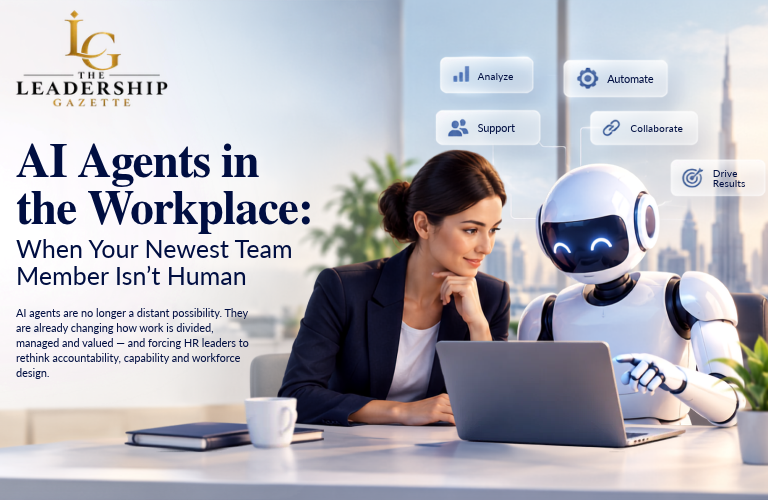
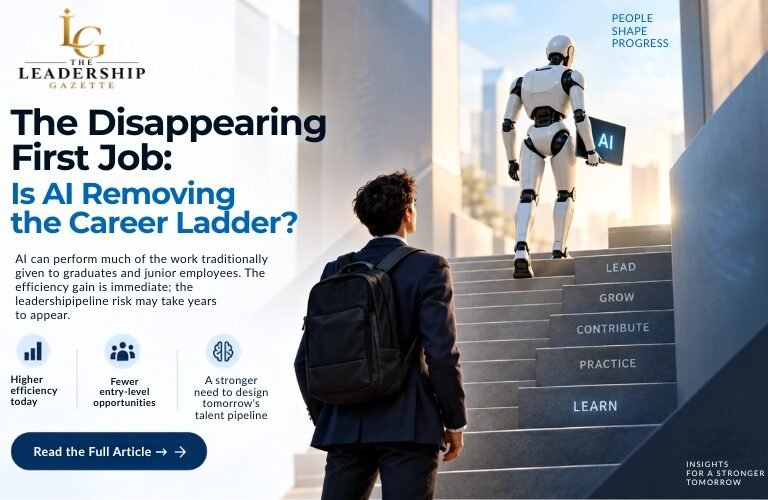
4 . How can organisations prepare their employees for the changes AI will bring?
The starting point is to recognise that AI transformation is a business, organisational and human transformation, not simply a technology project.
Organisations should first understand how AI will change the work itself. Which activities can be automated? Which can be augmented? Which roles will evolve? What new capabilities will be required? And equally important, where must human judgement, creativity, empathy and accountability remain central?
First, organisations need to build broad AI literacy. Employees do not all need to become technology experts, but they should understand what AI can do, what it cannot do, how to use it responsibly and how it can help them perform their roles differently and more effectively.
Second, organisations need to redesign work rather than simply add AI to existing processes. If AI allows a task to be completed significantly faster but the organisation continues to operate in exactly the same way, we may have achieved efficiency, but not necessarily transformation. The bigger opportunity is to rethink roles, processes, decision-making and how people spend their time.
Third, we need to invest just as deliberately in human capabilities. As AI becomes better at processing information, generating content and accelerating analysis, distinctly human capabilities become increasingly valuable.
There is also a significant leadership and cultural dimension. People will naturally have questions about what AI means for their roles and their future. Leaders need to communicate transparently, create space for experimentation and learning, and address concerns honestly. We should not underestimate the human impact of technological change.
I also believe leaders need to resist the assumption that because AI allows us to do something faster, faster is always better. AI can accelerate analysis, processes and access to information, but some things still require time: building trust, developing people, exercising judgement,changing deeply rooted behaviours and making decisions where the human consequences matter.
Efficiency removes friction, but some friction creates thought.
Ultimately, the organisations that benefit most from AI will not necessarily be those that adopt the most technology. They will be those that make the best choices about where technology creates value, redesign work intelligently and bring their people with them through the transformation.
5 . Which capabilities will future leaders need to thrive in a changing business environment?
I believe the leaders who will thrive in the future will be those who can combine business understanding, adaptability and sound judgement with the ability to lead people through uncertainty and change.
First, leaders need strong business acumen. Regardless of their function, they need to understand how their organisation creates value, what matters to customers, how the competitive environment is changing and how their decisions ultimately affect business performance. Functional expertise remains important, but it is no longer enough on its own.
Second is adaptability. The environment is changing too quickly for leaders to rely on a fixed leadership playbook. They need to be willing to question assumptions, adjust their thinking when circumstances change and remain comfortable operating without having all the answers.
Judgment will become increasingly important. Leaders have access to enormous amounts of information, data and AI-generated analysis, but having more information does not automatically lead to better decisions. Leaders still need to understand context, balance competing priorities, consider consequences and take accountability for the choices they make.
I would also place significant importance on emotional and cultural intelligence. Organisations are increasingly diverse and interconnected. Leaders need to understand different perspectives, communicate across cultures and generations, listen genuinely and adapt their approach while remaining authentic to their values.
Technology and AI fluency will clearly be important, but I do not believe every leader needs to become a technology expert. They need enough understanding to ask intelligent questions, recognise opportunities and risks and make informed decisions about how technology can create value.
Finally, I believe the human side of leadership will become more important, not less. As organisations become faster and more technology-enabled, people will still look to leaders for clarity, trust, purpose and confidence, particularly during periods of uncertainty.
Future leaders will need the confidence to make decisions, but also the humility to keep learning, listening and changing their minds when the evidence tells them they should.
6 . What advice would you give the next generation of HR and Learning & Development leaders?
My first piece of advice would be: understand the business before trying to change the people agenda.
HR and Learning & Development create the greatest value when they understand how the organisation makes money, serves its customers, competes, allocates resources and executes its strategy. The conversation then changes from “What HR initiative should we introduce?” to “What business problem are we trying to solve, and what people or organisational capability will help us solve it?”
Second, spend time outside HR. Talk to customers. Visit operations. Understand sales, finance and technology. Listen to people at different levels of the organisation. Some of the most valuable learning throughout my own career came from understanding the business through perspectives very different from my own.
Third, do not confuse activity with impact. The number of programmes delivered, people trained or initiatives launched tells us very little about whether we have actually created value. A successful leadership programme is not simply one that participants enjoyed. The real questions are whether behaviour changed, capability improved and the organisation performed better as a result.
Embrace data, technology and AI, but never outsource your judgement to them. Use technology to challenge your thinking, generate insight and improve decisions, but remember that behind every workforce number is a person, and behind every organisational decision there are human consequences.
I would also encourage the next generation to have the courage to challenge. HR earns credibility not by agreeing with the business, but by understanding the business well enough to know when to support, when to question and when to offer a different perspective. That needs to be done with respect, evidence and a genuine commitment to the success of the organisation.
At the same time, never lose empathy. You can be commercially minded, performance-focused and demanding while still treating people with dignity and respect. These are not competing choices.
Finally, take ownership of your own development. Stay curious, seek experiences that stretch you, learn from people who think differently from you and remain open to changing your mind. Titles and positions will change throughout a career, but your values, reputation and the impact you have on people will stay with you much longer.
If I could leave the next generation with one thought, it would be this:
Be close enough to the business to influence its direction, and close enough to the people to understand the consequences of that direction.